

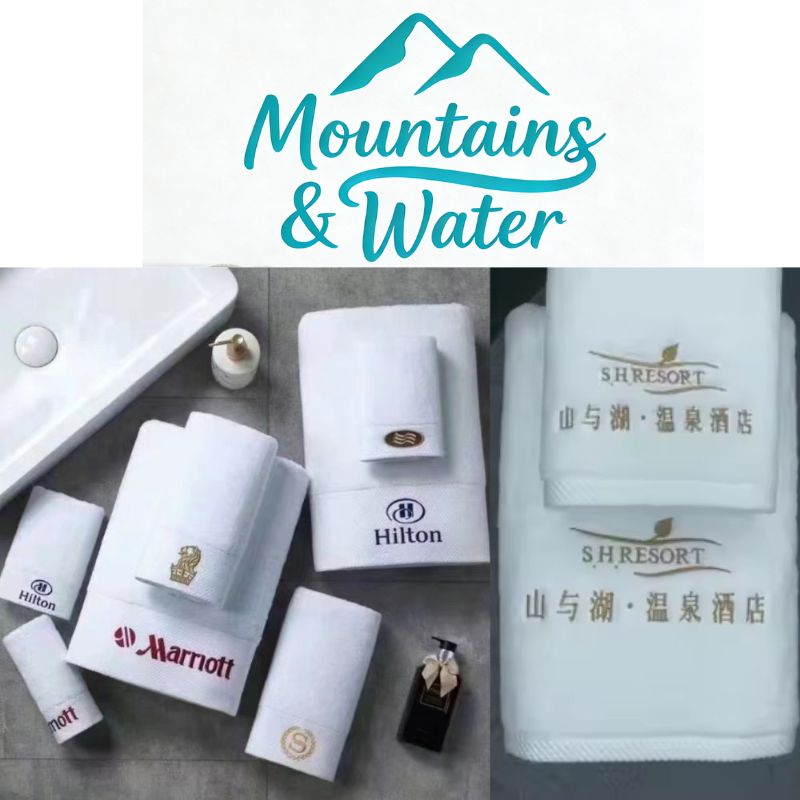
The production process of hotel bath towels

1. Fiber Selection: The Foundation of Quality
The journey begins with fiber selection, where raw materials define the towel's core properties. Long-staple cotton, such as Egyptian or Pima cotton, is preferred for its exceptional softness, breathability, and water absorption capabilities. These fibers are naturally hollow, enhancing their ability to trap moisture while remaining gentle on the skin. For eco-conscious options, bamboo or microfiber blends are increasingly used, offering sustainable alternatives without compromising performance. The fiber's fineness, measured in counts (e.g., 32S or 40S), directly impacts the towel's texture—higher counts yield smoother, more delicate fabrics suitable for luxury hotel settings.

2. Weaving: Creating the Looped Pile
Weaving transforms fibers into terry cloth, the distinctive looped pile fabric that characterizes bath towels. Single-loop or double-loop techniques are employed, with longer, denser loops increasing surface area for superior water retention. Jacquard weaving may be used for intricate patterns, though it comes at a higher cost. The weave structure must balance strength and flexibility: too tight, and the towel becomes stiff; too loose, and it lacks durability. High-end hotels often opt for spiral毛圈 (spiral loops), which enhance both absorbency and fluffiness, providing a more luxurious feel.
3. Dyeing and Finishing: Color and Performance Enhancement
After weaving, the fabric undergoes dyeing and finishing to achieve the desired color and functional properties. Reactive dyes are used for their vibrant, long-lasting hues, capable of withstanding high-temperature washing. The process includes:
- Bleaching: Hydrogen peroxide or enzymatic agents remove natural impurities and achieve a uniform base color.
- Dyeing: Precision temperature control (30–35°C) ensures deep dye penetration.
- Finishing: Treatments like softening with silicon-based agents reduce friction between fibers, while anti-shrinkage and anti-crease processes maintain dimensional stability. For colored towels, colorfastness is rigorously tested to prevent fading during commercial laundering.
4. Cutting and Stitching: Precision and Durability
The fabric is cut into standardized sizes (e.g., 1500mm × 800mm for bath towels) using automated cutting machines. Edge stitching, or hemming, is critical to prevent fraying and enhance longevity. Double-needle stitched seams are common, with reinforcement at stress points like corners. Some towels feature decorative borders or logos, added via embroidery or digital printing, aligning with hotel branding.

5. Quality Control: Rigorous Testing for Performance
High-end hotel towels undergo extensive quality control to ensure they meet strict standards. Key tests include:
- Water Absorption: Measured by the time taken to fully absorb water (≤3 seconds) and total capacity (≥300% of the towel's weight).
- Durability: Tensile strength tests in both warp and weft directions prevent tearing during washing.
- Colorfastness: Evaluations using a gray scale ruler to assess color retention after multiple washes.
- pH Value: Confirmation that the towel is neutral (pH 7) to avoid skin irritation.
- Softness: Subjective assessments by touch, often enhanced through pre-washing and softening treatments.

6. Sustainable Production: Eco-Friendly Innovations
The industry is increasingly embracing sustainable practices. Biologically based enzymes replace harsh chemicals in scouring and bleaching, reducing environmental impact. Recycled cotton and plant-based fibers are gaining popularity, while closed-loop water systems minimize waste. Additionally, some manufacturers use low-tension softeners and eco-friendly dyes to ensure products are both skin-friendly and planet-conscious.

7. Final Packaging: Ready for Hospitality
Once approved, towels are folded, labeled, and packed for distribution. The "ultimate fold" technique ensures a consistent, clean presentation for hotel rooms. Packaging may include individual wrapping for hygiene or bulk containers for institutional use. Labels often feature care instructions and hotel logos, reinforcing brand identity.